A rider in dark gear cornering on a wet tarmac road through dense forest, with a metal guardrail on the outside of the bend

01 Frontier

Ride farther.Ride smarter.Get home.

Motorcycle knowledge, equipment and support for riders across East Africa.

Field log
014 / Escarpment
Season
Long rains, closing
Surface
Tarmac, polished on descent
Compiled
Nanyuki, Kenya

Everything on this site sits under one of six headings. They are ordered the way a ride is: what you do on the road, where you are going, what happens when it goes wrong, and how the machine is kept alive in between.

A motocross helmet with orange and white graphics resting on a shelf in soft light

01

Ride

Road safety, riding technique, awareness.

Matatu behaviour, blind overtakes, night glare, wet murram. The habits that decide whether a route is survivable.

OpenGuides18
Folded paper maps overlapping on a table, marked up by hand with drawn lines and highlighted routes

02

Navigate

Routes, maps, fuel, weather, terrain.

Distances that are real, fuel gaps that are honest, and where the tarmac ends.

OpenRoutes logged31

03

Survive

Breakdowns, preparedness, roadside resilience.

What to carry, what to do first, and how to stay safe on a shoulder at dusk.

OpenChecklists9

04

Maintain

Service, diagnostics, workshop knowledge.

Intervals adjusted for dust, load and fuel quality rather than a European service book.

OpenIntervals24
A partly stripped motorcycle in a home garage surrounded by tool cases, a workbench and stacked parts

05

Equip

Gear, loadout, buying guidance.

Helmets, wet weather gear, luggage and tyres, judged against heat, dust and price.

OpenTested items46

06

Recover

Help when the ride stops.

Where to start when the bike will not move and you are a long way from anyone.

OpenResponseNot live
A forested escarpment with exposed rock cliffs dropping away to a wide wooded valley under high cloud

Field 014

Route feature Old Naivasha Road, Kenya 11 AUG 2026

The escarpment in wet season

Ninety kilometres from Nairobi to Naivasha on the old road, and why the descent is the only part that matters.

The old escarpment road is shorter, quieter and more interesting than the highway. In April it is also the reason riders end up in the ditch at the third hairpin. Here is how the surface actually behaves once the rain starts.

Distance
92 km
Surface
Tarmac, broken shoulder
Descent
700 m
Riding time
2 h 40 dry, 3 h 30 wet
Fuel gap
48 km
Season
Long rains, March to May

Read the story

Five lists worth running before a long day. None of this is equipment you need to buy. Most of it is ten minutes and a decision made while you are still somewhere you can act on it.

CL 01

Pre-ride check

Two minutes, cold, before the engine starts. In this order because each step tells you whether the next one matters.

  • TyresPressure by gauge, then look at the tread and the sidewall for cuts and embedded stones.
  • ChainSlack at the tightest point of rotation, not wherever it happens to be standing.
  • BrakesLever and pedal travel, then fluid level if the reservoir has a window.
  • LightsHead, brake, indicators. Brake light on both the lever and the pedal.
  • FluidsOil level on level ground, plus any leak that is new since yesterday.
  • FastenersAxle nuts, sprocket bolts, anything you or anyone else touched recently.
CL 02

Weather and terrain readiness

Judged the night before, then again at the door. A route that is fine in the dry may be a different route entirely.

  • Rain windowWhen it is expected to start, not just whether it will rain.
  • SurfaceMurram sections turn to clay quickly and stay that way after the rain stops.
  • River crossingsSeasonal crossings rise fast and fall slowly. Ask locally rather than guessing.
  • HeatMidday on the equator is a fatigue problem before it is a comfort problem.
  • LightWork backwards from sunset and add an hour of margin, not ten minutes.
  • AltitudeA cold, wet descent after a hot climb catches riders dressed for the start.
CL 03

Essential carry list

The set that earns its space on almost any route. Everything else is route specific.

  • Tyre repairPlugs, tool, and a way to reinflate that does not depend on finding a compressor.
  • ToolsThe sizes your bike actually uses, checked against your bike, not a generic set.
  • WaterMore than the ride needs. Dehydration reads as poor judgement long before it reads as thirst.
  • First aidCompact, and only items you already know how to use.
  • DocumentsLicence, insurance, registration, plus photographs of all three stored offline.
  • CashSmall notes. Fuel, repairs and help are not always card or mobile transactions.
  • LightA torch or headlamp that is not your phone, because your phone is your map.
CL 04

Fuel and route planning

Plan around the single longest gap on the route, not the average distance between stations.

  • Longest gapIdentify it before you leave and make sure your range covers it with margin.
  • Real rangeLoaded, into wind, on a rough surface. Not the range you get commuting.
  • ReserveKnow what your reserve is in kilometres, tested, not assumed.
  • Last certain fuelThe last station you are confident is open and stocked, not the last one on the map.
  • QualityBuy where the turnover is high. Low turnover means water and sediment.
  • SpareCarry a litre only if you have a container made for it and a safe place to mount it.
CL 05

Emergency contact preparation

Prepared before the ride, because none of it is possible to arrange afterwards.

  • Route sharedOne person who knows where you are going and roughly when to expect you.
  • Check in timeAn agreed time, and an agreed action if you miss it.
  • Local numbersStored offline in the phone and written on paper in the bike.
  • MedicalBlood group, allergies and conditions, somewhere someone will find them.
  • PowerA way to charge the phone that does not depend on the bike running.
  • Offline mapDownloaded for the whole route before you leave signal, including the return.

Boxes are printed marks, not controls. Nothing here is stored or tracked.
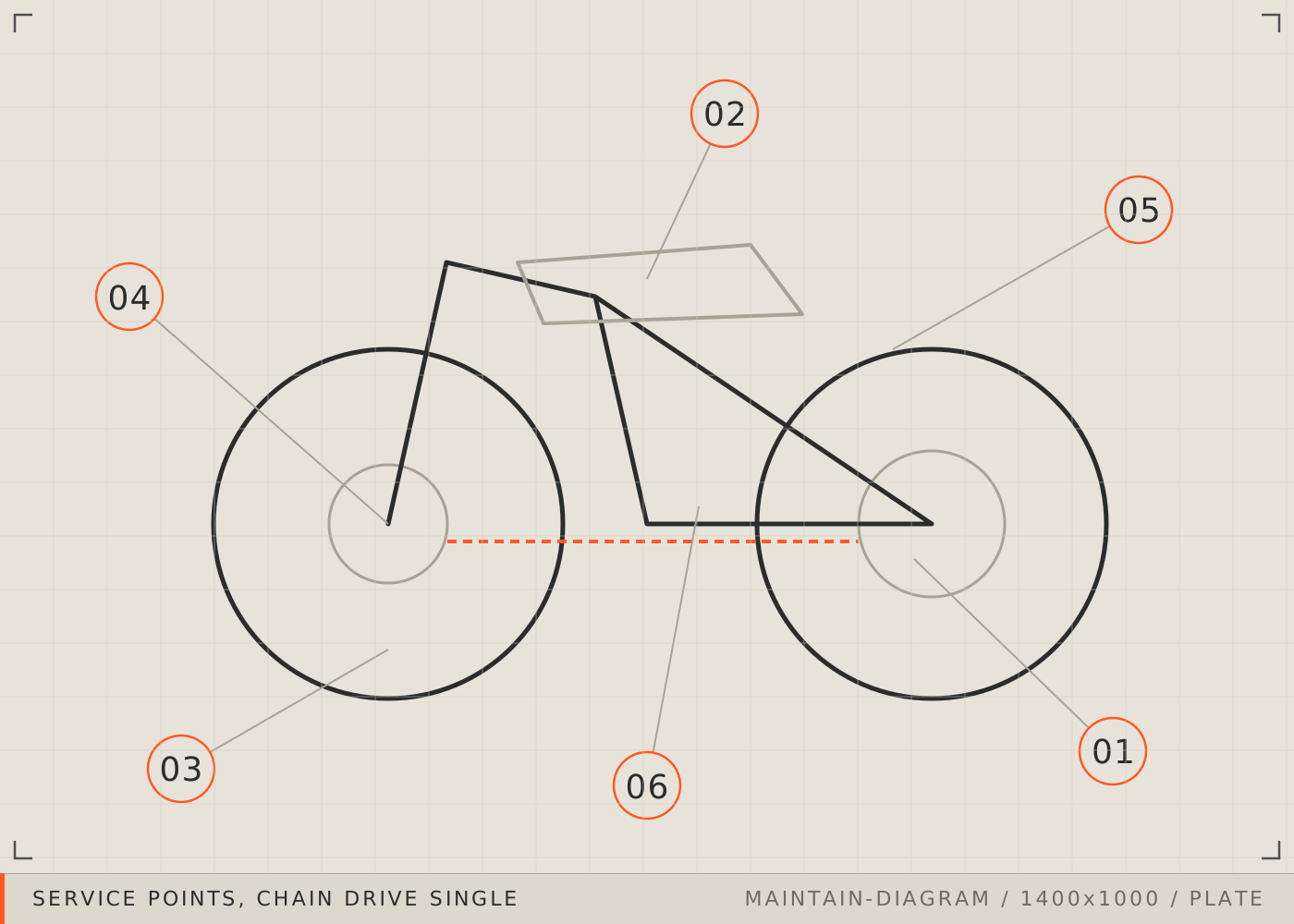
A schematic side view of a motorcycle with six numbered callouts marking routine service points
Fig. 05.1 Service pointsChain drive single

Six things that decide whether a bike finishes the route

Service books assume clean fuel, sealed roads and mild dust. Adjust the intervals for how the machine is actually used, or it will adjust them for you at the least convenient point on the route.

  • 01Chain and sprocketsSlack at the tight spot, tooth profile, 2 percent stretch limit
  • 02Air filterThe first thing to check on any dusty route bike that has lost power
  • 03Front brakePad thickness, disc lip, fluid clarity rather than just level
  • 04Wheel bearingsRock the wheel at twelve and six with the bike off the ground
  • 05Rear shockSag under load, oil weeping at the seal, damping on a known bump
  • 06Charging systemBattery at rest, then at idle, then at three thousand revolutions

Full intervals for tarmac and murram, with the reasoning for each, are in the Maintain section.

Frontier Moto does not sell equipment and takes no commission. Items appear here because they were used on a route or inspected in person. Where we have not tested something, it is marked untested.

EQ-01Head

Full face helmet, vented

Ventilation matters more than weight at equatorial midday. A quiet helmet that cooks you is the wrong helmet.

Field tested

EQ-02Wet weather

Two piece rain suit over armour

Survives a full season if the seams are taped and it goes over armour rather than under it. Packs smaller than a one piece.

Field tested

EQ-03Luggage

Dry bag with compression straps

Cheaper, lighter and more waterproof than hard cases, and it does not change the width of the bike in traffic.

Field tested

EQ-04Tyres

Dual purpose, road biased

For riders who meet murram occasionally rather than daily. A knobbly tyre used mostly on tarmac is a braking problem.

Field tested

07Recovery

Stranded? Start here.

Work down the list before you contact anyone. Having these five things ready turns a frustrating ten minute conversation into a one minute one.

Recovery dispatch is not live. Frontier Moto is not an emergency service and no vehicle is dispatched from this website. If anyone is injured, contact local emergency services first. The Recovery page explains what we can and cannot do, and what to do instead where no service is available.

Have this ready

  • 01Safety first, alwaysGet clear of moving traffic, make yourself visible, and check everyone before you check the machine. If anyone is injured, contact local emergency services immediately. Frontier Moto is not an emergency service.
  • 02Fix your locationRoad name or number, direction of travel, the last town you passed and roughly how far back. A screenshot of your map position is worth more than a description.
  • 03Describe the machineMake, model, approximate weight, whether the rear wheel turns freely, and whether it can be rolled or must be lifted.
  • 04Describe the fault plainlyWhat happened, at what speed, what it sounded like, and what it does now. Not what you think is broken.
  • 05State your safety statusWhether you are somewhere safe, whether you have water, whether it is getting dark, and whether you are alone.

Regulation 19 AUG 2026

Helmet and reflective requirements, what changed In preparation

A plain reading of current requirements for riders and pillions, with the parts that remain unclear marked as unclear.

5 min read

Road craft 18 AUG 2026

Reading a matatu before it moves In preparation

The signals that come three seconds before a sudden stop, and the following distance that makes them useful.

6 min read

Roadside 16 AUG 2026

The first ninety seconds after you stop In preparation

Position, visibility, then the machine. In that order, every time.

5 min read

Buying guide 15 AUG 2026

Inspecting a used bike in twenty minutes In preparation

The order to check things in, so that a fault ends the inspection before you waste an hour.

10 min read

Route note 14 AUG 2026

Nanyuki to Archers Post, surface report In preparation

Where the tarmac holds, where it does not, and the last certain fuel before the northern stretch.

6 min read

Roads 13 AUG 2026

Resurfacing works and the diversions they create In preparation

Reported by riders, updated when we can confirm it, dated so you can judge how stale it is.

4 min read